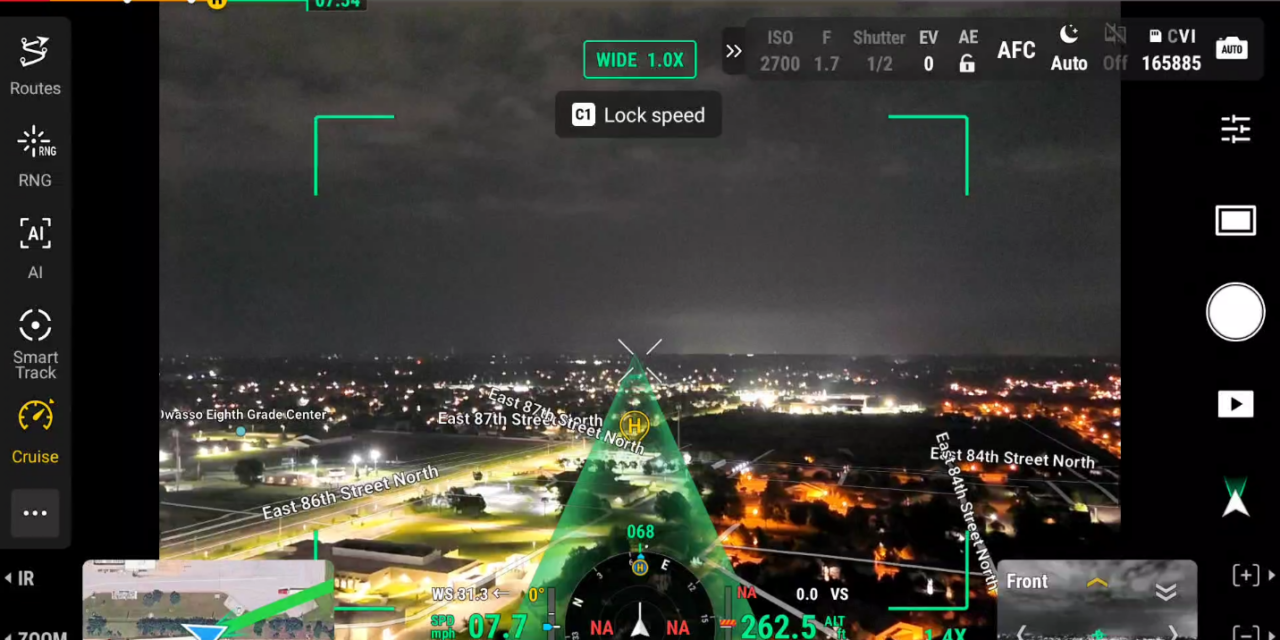
The Owasso Police Department is taking emergency response technology to a new level with its Drone First Responder Program, allowing drones to be dispatched to nearly every police or fire 911 call across the city within seconds.
The program, which launched a few months ago, is designed to give first responders immediate aerial views of emergency situations before officers or firefighters arrive on scene. Strategically placed drone launch sites throughout the city allow the department to quickly deploy drones with a range of up to three miles, effectively covering all of Owasso.
Officials say the drones are being used for a wide variety of incidents, ranging from parking complaints and traffic crashes to robberies, domestic disturbances, and even hostage situations involving armed suspects.
During a recent fire in Owasso, police were able to deploy a drone to the scene within seconds. The live aerial footage provided firefighters with critical information about the size of the fire, the number of fire trucks needed, and the best locations to begin attacking the blaze. Police have also used the drones to assist in locating burglary suspects and evaluating potentially dangerous domestic situations before officers arrive.
According to the department, one of the biggest advantages of the program is officer safety and situational awareness. By viewing live video before arriving on scene, officers can better assess violent or rapidly evolving situations as they unfold.
The drones are operated remotely by a team of trained pilots stationed at the police department. The pilots monitor incoming emergency calls, and once they receive information about the location and nature of the incident, they can immediately launch a drone to the scene.
Live video from the drones is then shared directly with responding officers and firefighters through phones and laptops, giving them real-time intelligence while en route.
Police say the technology dramatically cuts down the time it takes to evaluate incidents. Situations that once may have taken 20 to 30 minutes to fully assess can now be understood in a matter of seconds.
Drone Pilot Officer Travis Harris explained that the drones weigh approximately four pounds, with flight times varying depending on weather conditions, wind speed, and the location of the call. He also noted that current FAA regulations only allow a pilot to operate one drone at a time, although that technology and policy continue to evolve.
“As of right now, per FAA rules, a pilot can only operate one drone at a time, but that is rapidly evolving,” Harris said. “Currently, to my knowledge, there is only one department in the country that has a waiver for pilots to fly multiple drones.”
Police officials say the program is already proving to be more valuable than expected, with drones sometimes being dispatched more than a dozen times per day. In addition to improving response times and officer safety, the drones also help conserve city resources by allowing departments to scale back unnecessary responses if a drone determines there is no active emergency.